How to Prevent Frozen Pipes and What to Do If One Bursts
We were told this past weekend was going to be a real life “Day After Tomorrow” across north Georgia. Thankfully, the ice storm that we were warned about didn’t hit as hard as predicted.
But don’t let that fool you.
The next seven days are bringing freezing nights, wind chill, and conditions that can legitimately cause pipe bursts for Cumming and the surrounding area. Temps are going to hit 13°F tonight, and won’t go above freezing until mid-day Tuesday. There’s a level of concern that comes with temps in the 20s, but anything in the teens or lower gets exponentially more dangerous.
I’ve already gotten a lot of calls and messages from people looking for advice on how to be best prepared for this week. It can be easy to take things too seriously or too lightly, so here’s our best attempt at giving you an accurate guide that’s actually helpful.
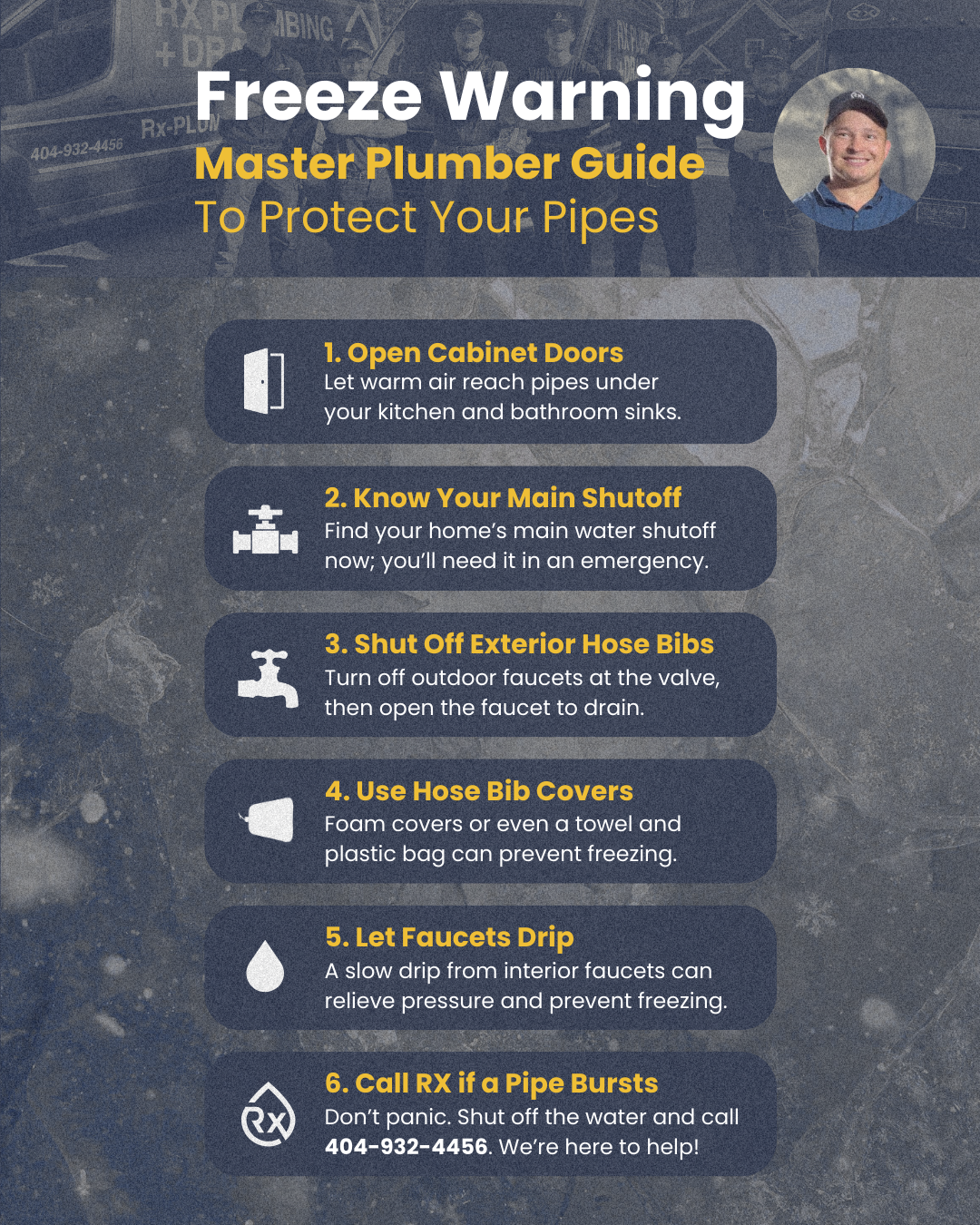
Why Your Pipes Are at Risk This Week in Cumming
The biggest problem with this cold is that it’s going to keep sticking around.
It’s below freezing as I write this and will only get colder with tonight’s forecast saying 13°F. Tomorrow night, it’ll drop back into freezing temps again. We're looking at seven straight nights of below-freezing temps, with a few nights well into the teens. And if you add wind chill to that, it gets even worse.
Just because the roads are clear of ice and taken care of doesn't mean your pipes are safe.
How to Prevent Frozen Pipes at Night
Let’s keep this simple. You don’t need to buy fancy gear. You don’t need a plumber for most of this. You just need to do a few basic things, and you need to do them consistently every night until the weather shifts.
Here’s what I tell my family, my neighbors, and anyone who calls.
Open Cabinet Doors to Protect Kitchen and Bathroom Pipes
Most kitchen and bathroom sinks sit right up against exterior walls. Those walls and pipes are the most susceptible to freezing because they’re directly up against the freezing temps. These areas can get colder than you think.
When you leave those cabinet doors closed, it’s much more difficult for the heated air from your vents to get to those pipes. That’s when freezes are more likely to happen. Simply open the cabinet doors before bed to let the warm air in. It’s simple, free, and actually helps!
Know Where to Find Your Main Water Shutoff Valve
If a pipe bursts, you don’t have time to figure out where your shutoff is. You need to act fast or water will keep flowing and causing damage.
In most homes around Cumming, the shutoff is either:
In the garage near the water heater
In a crawlspace or basement
In a ground box near the driveway or curb
Find it today. Show everyone in your home. When something goes wrong, knowing how to quickly shut off water to your home can save you a lot of money and damage.
How to Shut Off Outdoor Hose Bibs Before They Freeze
Outdoor faucets are the weak spot. The cold travels from the exposed spigot into the wall, freezing the pipe inside. That’s where most pipe bursts happen.
To prevent that:
Find the shutoff inside your home to the outdoor spigot.
Turn off the water to the spigot from inside the house.
Go outside and open the spigot to drain whatever’s left.
Use Hose Bib Covers to Prevent Spigot Freezing
Foam hose bib covers add insulation and block wind chill. Even after draining the line, exposed faucets can still freeze and crack. That damage can run all the way into your wall.
If you can’t find a cover at the store, wrap the spigot in a towel and cover it with a plastic bag. Secure it with tape or a rubber band. This quick DIY fix still adds valuable protection by keeping wind chills and moisture from entering the pipe.
Should You Let Faucets Drip to Prevent Freezing?
If your home has had frozen pipes before, or if the pipes in your crawlspace are really long, a slow drip can help to keep things from freezing and bursting.
All you have to do is drip one faucet overnight, and just the cold side. It’s best if this faucet is the one farthest from your main water line. This tip isn’t wasteful if it prevents a $5,000 repair. A few gallons of water is cheap insurance!
Repeat Freeze Protection Steps Nightly Until Temperatures Rise
One night of prep won’t carry you through a full week of freezes. You need to protect your pipes every night if the temperature drops below freezing. Keep leaving your cabinet doors open and monitoring your hose bibs each night of this cold snap. Stay consistent to make sure you protect those pipes.
What to Do if a Pipe Freezes or Bursts
If it’s too late for prevention, or if you still experience a burst pipe after these steps, here’s what to do:
Shut off your main water supply immediately.
Do not use space heaters or torches to thaw pipes.
Some frozen pipes thaw without bursting. Some don’t. If water starts spraying or leaking, fast action will limit the damage and cost of repair.
Our team is close by and can arrive quickly for emergencies. We’ve been helping homeowners handle frozen pipe emergencies for years. Call us and we’ll get there fast with the tools and expertise to take care of the problem.
Help Your Neighbors Prevent Frozen Pipes
Not everyone knows what to do in a freeze. If you’ve got elderly neighbors, new homeowners, or folks who aren’t familiar with plumbing basics, we’d encourage you to check in with them. Ask if they know where their shutoff is. Offer to help cover their hose bibs. Share these tips and lend a hand!
A few minutes of help could prevent someone from paying thousands in repairs.
Frequently Asked Questions About Frozen Pipes in Georgia
At what temperature do pipes freeze in Georgia?
Pipes start commonly freezing around 20°F, especially in crawlspaces and exterior walls. This week’s 13°F temps are well below that mark, so we’re in the danger zone.
Does leaving the heat on prevent pipe freezing?
Not by itself. Central heat often doesn’t reach cold spots behind cabinets or in garages. You still need to open cabinets, insulate spigots, and drip faucets in vulnerable areas.
Should I drip hot or cold water to prevent pipes from freezing?
Drip the cold side only. Choose one faucet on the highest level of the home and let it drip slowly overnight.
Can pipes freeze in new homes?
Yes. New construction helps, but even newer homes can have exposed or poorly insulated pipes in garages, attics, or exterior walls. Just because a house is new doesn’t mean it was well-built to withstand freezing cold temperatures for long durations.
What if I can’t find my shutoff valve?
Call Rx Plumbing. We’ll walk you through how to find it, or even come show you in person if possible.
Rx Plumbing is Cumming’s Trusted Team for Burst Pipes
This isn’t the coldest winter Georgia has seen, but it doesn’t have to be in order to deal some serious damage. A string of nights below freezing is all it takes to burst a pipe. Stay ahead of the problem by prepping your home every night, sharing this information with neighbors, friends, and family, and taking prevention like this seriously.
In the event that something does go wrong, reach out to our team for fast, affordable help.