What to Do If You Have a Water or Sewage Leak
“I called Rx Plumbing to repair a water leak at my home.”
That’s how Keith’s review of his Rx experience begins. At least, as far as we know. Maybe there was existential dread or hours of comparing various plumbers before he finally picked up the phone. All we know is that he had a leak, found us, and then trusted us enough to call.
Within 90 minutes of that call, Elijah was at Keith’s door (Elijah is one of our 5-star plumbers: always quick, kind, and clean).
“[Elijah] was polite, professional, and assured me they could repair the leak with no issues.”
That’s the goal every time. Show up fast. Get eyes on the problem. Give a clear answer. If you’re dealing with a water leak right now, here’s a quick guide to walk you through the next steps.
What should you do if you have a water leak in your house?
Shut off the water if needed.
Identify the source.
Call a plumber if the leak is not obvious or continues.
Acting quickly helps prevent damage and reduces repair costs.
Why Did My Water Leak Start in the First Place?
Water leaks don’t happen randomly. Something failed. Most of the time, it’s one of these:
A damaged water line
A worn-out connection
High water pressure over time
Poor installation from years ago
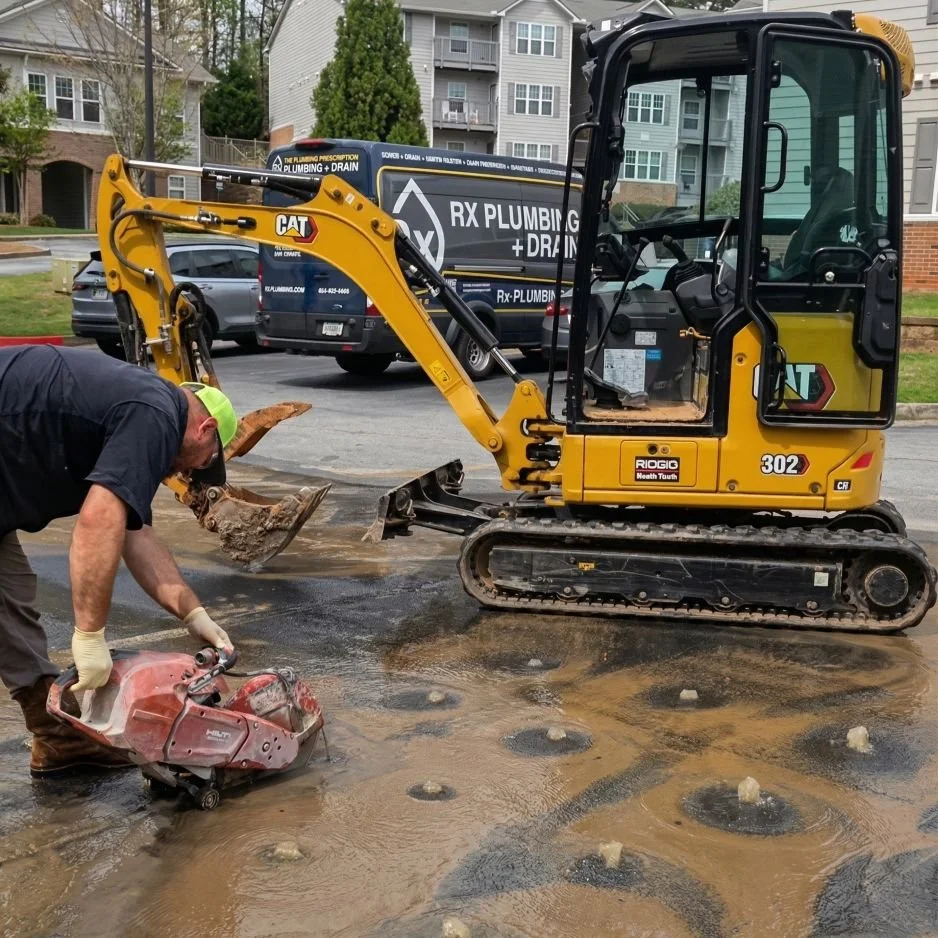
In Keith’s case, the leak required digging to reach the problem. That tells you right away that his issue wasn’t surface-level (pun-intended). And honestly, a lot of leaks do require some digging (in more ways than one).
Step 1: Stay Calm and Confirm It’s a Leak
Start simple. Not every wet spot is an actual plumbing issue.
Check for:
Spills
Rainwater
Condensation
If none of those apply, you’re likely dealing with a leak.
Common signs include:
Water pooling on floors
Damp drywall
Musty smells
Wet areas outside
If you see any of these, it’s time to take action.
Step 2: Shut Off the Water If Needed
If the leak is active, shut off the water. This prevents damage from spreading.
You can shut off:
A Local Valve
If the leak is isolated to a fixture.
The Main Water Supply
If you’re unsure where the leak is.
Your main shutoff is usually:
Near the water heater
In a basement
In a utility room
Outside near the meter
Turning off the water immediately buys you time to breathe and respond wisely.
Step 3: Understand How Serious It Is
Now take a closer look and ask yourself:
Is water still spreading?
Is anything being damaged?
Is this inside or outside?
Leaks are some of the most time-sensitive plumbing issues you can encounter, so it’s really important that you investigate closely and take appropriate action.
Step 4: Call a Plumber Early
This is where many people hesitate. No one wants to call a plumber if they feel like they can handle an issue themselves. We get it! The problem is, a leak is often a pretty technical fix. Getting a plumber you can trust to your home as quickly as possible can save you a lot of money and headache.
Step 5: Expect a Clear Diagnosis and Quote
Once on-site, the next step is clarity. Any plumber worth their salt will make sure that you aren’t confused about what’s going on.
Here’s what Keith had to say about how Elijah brought clarity:
“He assured me they could repair the leak with no issues. The quote for the work he provided was very fair.”
That’s how it should go. You should understand:
What failed
Where the leak is
What it costs to fix it
No guessing and no half-answers.
Step 6: Be Prepared for Real Work
Some leaks are simple, but a lot are not.
In Keith’s case, the repair required digging and opening part of the basement wall:
“They had to remove some sheetrock in my basement.”
That’s normal for certain leaks. What really matters is how that work is handled, both during and after.
Step 7: Pay Attention to How the Crew Works
A good crew moves efficiently. They don’t waste time or create unnecessary damage. Keith noticed this immediately with the Rx crew:
“He was joined shortly by two of his co-workers and the entire job was completed within three hours.”
Three hours. We don’t mean to toot our own horn, but that’s pretty impressive! That includes:
digging
making the repair
restoring the area
That’s what experience and expertise looks like when the plumbers actually care about the homeowner.
Step 8: Watch the Cleanup
This is where so many plumbing companies fall painfully short. The job gets done, but the mess stays behind. It’s a common trend in the trades, but it’s unacceptable for Rx standards.
“They left the area of the leak, which required a great deal of digging, looking better than it had prior to their arrival.”
And inside the home:
“They were careful to leave the area clean with no debris.”
At Rx Plumbing, we believe that your home shouldn’t feel like a job site after our plumber leaves. It should look like we were never there!
Step 9: Make Sure the Problem Is Fully Resolved
A proper repair doesn’t stop at fixing the leak. The whole plumbing system should be checked. Connections should be secure, the water pressure should be stable, and no weak points should be left behind. That’s how you avoid repeat issues, and this is where getting a licensed, insured, warrantied, and guaranteed plumber who’s serious about their work really pays off.
Why Water Leaks Are Often Bigger Than They Look
Most leaks start small, but water moves nonstop, travelling through soil, behind walls, and even weakening structures over time. What you see with the naked eye is often only part of the problem. Keith’s leak required digging and interior access to address the full scope of the issue. That tells you how much was happening behind the scenes.
When You Should Call a Plumber Immediately
Some leaks simply don’t mess around.
Call right away if:
Water is spreading quickly
Your yard is wet without rain
You don’t know where the leak is
The leak involves sewage
Any time spent waiting or deliberating increases damage.
How to Reduce the Risk of Future Leaks
You can’t prevent every issue, but you can absolutely lower your risk.
Monitor Water Pressure
High pressure damages pipes over time.
Pay Attention to Early Signs
Low pressure
Minor damp spots
Unusual sounds
Inspect Older Systems
Sign up for an annual plumbing inspection
What a Good Water Leak Repair Experience Should Feel Like
The following should be hallmarks of every leak repair:
Fast response
Clear answers
Fair pricing
Efficient work
Clean results
Keith summed it up best:
“I can not say enough great things about my experience with this company and their employees. Would not hesitate to use them again.”
At Rx Plumbing, we believe that trust is earned. Give us the opportunity to earn yours.
FAQ: Water Leaks in the Home
What should I do first if I find a leak?
Shut off water if needed. Then assess and call a plumber if the source is unclear.
How do I know if the leak is underground?
Look for wet yard areas, pooling water, or a moving meter with no usage.
Can leaks cause serious damage?
Yes. Water can damage flooring, walls, and structure over time.
How fast can leaks be fixed?
Some take a few hours. Others take longer depending on location.
Should I wait to see if it gets better?
No. Leaks always get worse.
North Atlanta’s Trusted Leak Experts
Keith made the right call, and we’re grateful that he trusted us! He acted fast, got help quickly, and the problem was handled in hours instead of turning into something worse.
If you’re dealing with a leak in Cumming, Alpharetta, Sugar Hill, or anywhere else in North Atlanta, get it checked by Rx Plumbing & Drain.
We’ll find the problem, fix it fast, and leave your home clean when we’re done.