Do you think there’s a pipe leak beneath your property? The depth of the pipe helps plumbers understand what a repair may involve. Water and sewer lines usually lie at specific depths in Cumming, Alpharetta, Suwanee, and across North Atlanta. The depth of these lines depends on three basic factors:
Cold weather
Gravity
Ground pressure
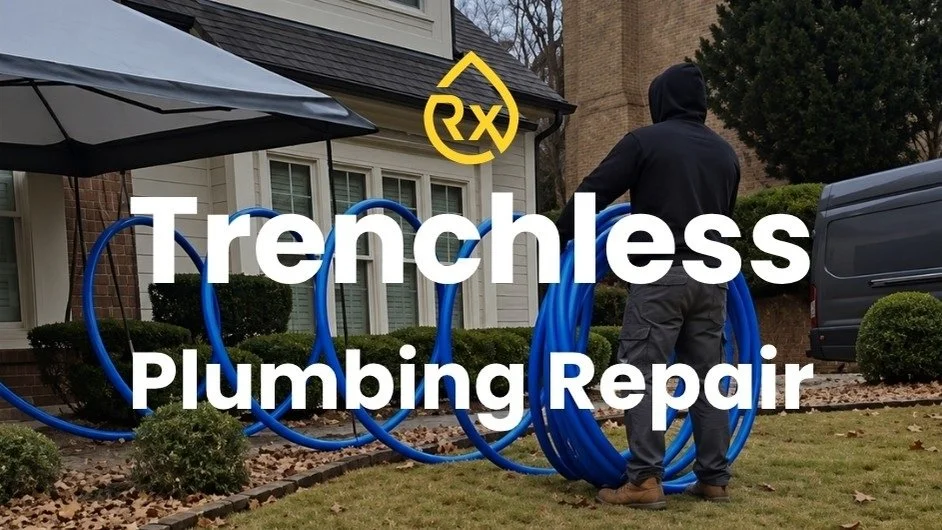
This is a video of the RX Plumbing and Drain team performing a trenchless water line replacement that stretched from the house all the way to the water main at the street. Without the trenchless method, we would’ve had to trench the entire yard to replace the water line.
How Deep Are Water Lines Buried Around Atlanta?
Georgia plumbing code requires exterior water supply pipes at least 12 inches below ground. They must sit at least 6 inches below the local frost line, if that happens to push it even deeper.
These are minimums, not the depth of every pipe. Cumming's public water mains have separate rules requiring at least 4 feet of depth.
How Deep Are Sewer Lines Buried Around Atlanta?
Georgia's plumbing code sets a 6-inch minimum burial depth for building sewers. However, gravity and the location of the sewer connection often require much deeper pipes. The depth can change considerably between your foundation and the street.
Why Are Water and Sewer Lines Buried at Different Depths?
Plumbers place water lines and sewer lines at different depths because these pipes are very different from each other.
Main Water Supply Lines
Plumbers are required to place these pipe deep enough to protect them from freezing temps and surface weight, like cars.
Learn more about how to prevent frozen water lines.
Sewer Main Lines
Sewer lines operate without water pressure. Instead, they rely on gravity to drain wastewater out of your house smoothly. A pipe that leaves your foundation at 2 feet deep may easily sit 6 to 8 feet underground by the time it meets the street.
You can learn more about our underground plumbing services to get help fast with your buried lines.
Common Causes of Buried Pipe Leaks in Georgia Clay
North Atlanta soil is mostly made of heavy red clay, which expands when wet and shrinks when dry. This constant shifting brings about really drastic pressure on our buried pipes.
Here are the main reasons underground lines crack or fail:
Tree Root Damage: Tree roots naturally seek tiny loose joints or hairline cracks in sewer pipes. Once inside, roots can grow quickly and block or damage the pipe.
Soil Movement: Shifting red clay can stress older cast iron and PVC pipes, leading to sagging spots where waste collects and causes clogs.
Aging Materials: Over time, galvanized steel water lines can corrode, while clay sewer pipes can crack or separate at their joints.
At RX Plumbing, our plumbers can find a leak under concrete slabs, driveways, or gardens thanks to our modern leak detection equipment and years of experience. Our team pinpoints the pipe damage without destroying large areas of your yard, which reduces repair costs and heartbreaking damage.
Traditional Digging vs. Trenchless Sewer Pipe Repair Options
Traditional digging when repairing underground leaks means using an excavator to expose trenches along the pipe to access it and repair or replace it. This damages lawns and tears up driveways when necessary. While its often unavoidable, there’s sometimes a modern option called trenchless sewer pipe repairs where our team can repair or even replace long portions of pipe with minimal damage.
Pipe Bursting
If your old sewer pipe is badly damaged and the layout and other factors make it possible, our team often offers the trenchless sewer repair option of pipe bursting. We pull a new high-density polyethylene pipe directly through the old one. A heavy steel bursting head breaks the damaged pipe outward while pulling the new pipe into position behind it.
Finding and Repairing Leaks Beneath Concrete Slabs
Sometimes leaks come directly from beneath your home foundation. Performing slab leak detection beneath concrete requires specialized tools to locate small water leaks under thick floors.
Once we find the leak, we can fix the pipe in the broken spot or even perform a complete underground main water line replacement.
If you’re getting skyrocketing water bills, we can offer you a clear, fast diagnosis that may save you money by locating and fixing the leak quickly. You can also check our coupons page to view current offers.
Frequently Asked Questions About Buried Water and Sewer Lines
How can I locate my buried sewer line before digging?
Call 811 before doing any outdoor digging project. Utility technicians mark public utility lines. For private sewer lines on your property, a licensed plumber can use electronic pipe locators to trace the line path and depth.
Do deep sewer pipes freeze in Atlanta?
Sewer lines rarely freeze in Georgia. Burial depth and ground warmth help protect them, but shallow or blocked sections can still freeze.
Does a deeper water or sewer line cost more to repair?
Often, yes. Deeper pipes may require more digging, larger access pits, and extra safety measures. The repair cost also depends on the pipe's condition and location.
Is trenchless sewer repair possible for deep lines?
Yes. Trenchless repairs often require smaller access pits than traditional digging. Deep pipes can still require larger pits and more labor.