Why Is My Water Heater Leaking? 7 Common Causes (And What to Do Next)
A leaking water heater doesn't always mean you need a new one. Most leaks come from one of seven common causes, and several can be repaired without replacing the tank. The key is finding where the water is coming from before deciding what to do next.
Nothing ruins a day or week quicker than finding water leaking from your water heater. But don’t freak out and buy a new tank just yet…. Hold on a minute and take a deep breath. Some leaks come from loose fittings or old valves that we can quickly replace. Others do come from internal rust, which means you’ll need to get a new unit in those cases.
Either way, finding where the water is leaking from is the first step to taking care of the situation quickly and correctly. At RX Plumbing & Drain, we repair and replace leaking water heaters all the time across Cumming, Alpharetta, Johns Creek, and other nearby North Atlanta neighborhoods. Don’t panic! Reach out to usand we can typically arrive within the hour to handle the leak.
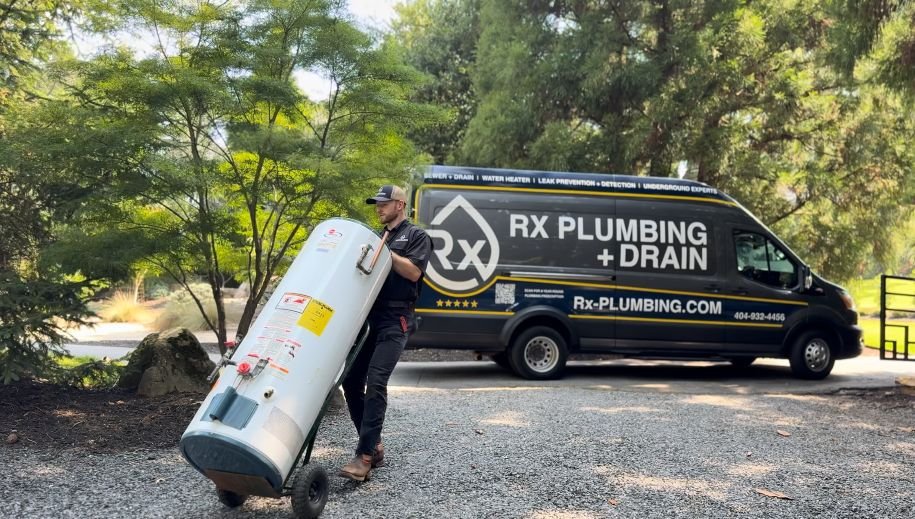
How do you find where a water heater is leaking from?
To find the source of a water heater leak, check the three main areas:
top pipes
side valves
bottom drain pan
Top leaks usually come from loose inlet fittings or worn rubber gaskets. Leaks on the side often come from a failing Temperature and Pressure (T&P) relief valve. Leaks pooling under the tank mean the inner steel body has rusted through, which requires a full water heater replacement.
How to Know If Your Water Heater Is Really Leaking
Sometimes, what looks like a leak can just be normal condensation. You need to take signs of a leak seriously, but know that it’s not the end of the world and could be nothing, a small fix, or a full replacement in the worst case scenario. Our Georgia summers get so hot and humid that cold water filling the tank produces moisture on the outside shell via condensation, which then drips down and pools on the floor.
To confirm if the water “leak” is just condensation, wipe the entire tank, the top pipes, and the floor with a dry towel. If the spot is wet again within two hours, there is an active leak that needs intervention.
7 Causes of a Water Heater Leak
1. Loose Top Pipe Connections
Science 101 (maybe 201?): metal expands when hot and shrinks when cooled down. With time, frequent changes in temperature slowly loosens the pipe connections on the tank top because of the contracting and expanding cycle of the metal.
If water has collected on the top shell, check those joints first. Tightening the nuts with a wrench will often stop these leaks, but if there’s any cracked rubber seals inside the flex lines, you’ll have to replace them to fully fix the problem.
2. Temperature and Pressure Relief Valve
Every water heater has a T&P safety valve on the top or side, which opens if pressure or heat builds up to unsafe levels. This valve also drains excess water through a pipe pointing toward the floor.
If this valve drips often, it may be due to high water pressure in your system. In this case, a licensed plumber like RX can replace a faulty T&P valve for you.
3. A Leaking Drain Valve
Plumbers use the drain valve to flush out waste during yearly maintenance. Many standard units come with cheap plastic drain valves from the factory, which can become brittle with age and then crack under pressure.
Brass valves can also leak if sediment gets stuck in the seal after a flush. If you see water dripping from the valve spout, replacing it with a heavy brass valve will stop the leak.
4. High Household Water Pressure
If water pressure in your home is too high, it puts stress on your entire plumbing system, which pushes water out through weak points like pipe joints and safety valves. A licensed plumber can install an expansion tank on top of your water heater to handle extra pressure and protect your whole plumbing system. We actually just installed one last week in Suwanee!
5. A Worn Out Anode Rod
Inside your tank sits a sacrificial anode rod. This is a metal rod that draws corrosive minerals toward itself so that they eat away at the rod instead of your steel tank.
Anode rods last about 3 to 5 years. Once the rod is worn out, those same minerals begin attacking the inner walls of your tank. Checking this rod during regular plumbing tune-ups will prevent you from early tank failure.
6. Corroded Tank Interior
The inner steel lining is likely to rust through if water pools beneath the tank and the top connections are dry.
Water heaters use a glass lining inside a steel shell. Once water touches raw steel, rust sets in fast. A rusted tank can’t be patched or welded and still maintain the integrity needed to safely house the heat and pressure required. When the tank rusts through, you must get a whole new water heater.
7. Worn Heating Element Gaskets
Electric water heaters have some elements that screw into the tank side. Rubber gaskets seal these elements and stop water from leaking out around the wiring.
If these rubber seals dry out or crack, water seeps past them. Reach out to a plumber you trust (alwaysconfirm they’re licensed and insured) to drain the tank, swap out the old gaskets, stop the leak and save your home from damage!
Should You Replace Your Water Heater?
Thedifference between needing a water heater repair or a full replacementwill depend on three simple things: location, age, and tank health.
Repair the unit if the leak comes from top pipes, a drain valve, a safety valve, or a heating element seal.
Fully replace the unit if water leaks directly from the bottom of the tank shell, or if the unit is more than 10 years old and showing signs of failure. Putting more money into fixing an old, compromised tank is almost never a good idea.
If you need a new water heater, check our coupons page to see if you cansave money with any of our current discounts or applicable rebates.
Simple Ways to Prevent Water Heater Leaks
These little nips in the bud will keep your hot water flowing and reduce the risk of damaging leaks:
Flush the tank once a year: Draining sediment stops heat spots that crack the bottom glass lining.
Test the T&P valve: Lift the lever once a year to ensure water flows and shuts off completely.
Inspect the anode rod: Have a plumber check the rod every three years and change it when worn out.
Treat hard water: Hard minerals speed up corrosion inside your tank.
Protect your supply lines: Temperature drops put extra strain on pipe joints. Read our practical steps on how to prevent frozen pipes during Georgia winter snapsto keep your supply lines safe.
Frequently Asked Questions About Leaking Water Heaters
Can I use my hot water if the water heater is leaking?
It depends on where the leak is. If it’s a minor drip from a top connection, you can keep using it temporarily. However, if the tank’s leaking from the bottom, or if water’s dripping near electrical components, you should shut off the power and the water supply immediately to prevent electrical shorts or a major flood.
Does a leaking water heater mean I need a new one?
Not always. If the leak’s coming from the T&P valve, a loose pipe connection, or the drain valve, those parts can be repaired or replaced quickly. If the steel tank itself is rusted through and leaking from the bottom, the system must be replaced immediately.
How long do water heaters typically last in North Georgia?
Most standard tank water heaters last between 8 and 12 years. If your unit’s over 10 years old and has started leaking, replacing it with a modern, highly efficient model is usually more cost-effective than repairs on an old system.